
Object
Title: Current Educational Issues in the Armenian Community of Iran
Journal or Publication Title:
Հայոց պատմության հարցեր = Вопросы истории Армении = The Problems of the History of Armenia
Date of publication:
Number:
ISSN:
Additional Information:
Мкртчян Карен Г., Մկրտչյան Կարեն Գ.
Other title:
Актуальные образовательные проблемы в армянском сообществе Ирана ; Արդի կրթական խնդիրները Իրանի հայ համայնքում
Corporate Creators:
Coverage:
Abstract:
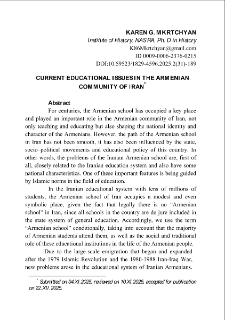
For centuries, the Armenian school has occupied a key place and played an important role in the Armenian community of Iran, not only teaching and educating but also shaping the national identity and character of the Armenians. However, the path of the Armenian school in Iran has not been smooth, it has also been influenced by the state, socio–political movements and educational policy of this country. In other words, the problems of the Iranian Armenian school are, first of all, closely related to the Iranian education system and also have some national characteristics. One of these important features is being guided by Islamic norms in the field of education. In the Iranian educational system with tens of millions of students, the Armenian school of Iran occupies a modest and even symbolic place, given the fact that legally there is no “Armenian school” in Iran, since all schools in the country are de jure included in the state system of general education. Accordingly, we use the term “Armenian school” conditionally, taking into account that the majority of Armenian students attend them, as well as the social and traditional role of these educational institutions in the life of the Armenian people. Due to the large-scale emigration that began and expanded after the 1979 Islamic Revolution and the 1980-1988 Iran-Iraq War, new problems arose in the educational system of Iranian Armenians. These problems primarily led to an unfavorable outcome regarding the consolidation or closure of schools. Suffice it to note that in the 2005-2006 academic year, 15 million people attended schools in Iran, including 8,000 Armenian students. Obviously, in the context of these digital data, the preservation of Armenian schools, at least symbolically, becomes of secondary importance to the state. The Armenian school in Iran, which has already suffered as a result of emigration, has also faced some problems created by state educational institutions from time to time. It is obvious that even a significant reduction in extracurricular activities related to Armenian studies can affect the youth of the community, leading to gaps in the full awareness of national identity. Nevertheless, many meetings and discussions were organized between the community's public structures and official bodies to preserve the Iranian Armenian school. It should be noted that these complex and confusing issues found expression in the Armenian press of Iran at that time. Publications there are an important source of material for understanding existing problems and their features. In the community press, the daily newspaper “Alik”, the weekly newspaper “Araks” and other newspapers, one can find publications on educational issues, interviews with educators and teachers, statements, reports on school years, as well as concerns, debates, and opposing opinions. The positive conclusion by the Iranian state organization “Saman Sanjesh”, which provides insight into the quality and level of education in the Armenian school, was also important for this study.
На протяжении веков армянская школа занимала ключевое место и играла важную роль в армянской общине Ирана. Она не только воспитывала, но и формировала национальную идентичность и характер у армян. Однако путь армянской школы Ирана не прошел гладко, так как она также испытала влияние государственных, общественно-политических движений и образовательной политики этой страны. Другими словами, проблемы иранской армянской школы, прежде всего, тесно связаны с иранской системой образования, а также имеют некоторые национальные особенности в этой образовательной сфере, руководствующейся исламскими нравами. В иранской образовательной системе с десятками миллионов учеников армянская школа Ирана занимает скромное и даже символическое место, учитывая тот факт, что юридически в Иране нет «армянских школ», поскольку все школы страны де-юре включены в государственную систему общего образования. Соответственно, мы применяем термин «армянская школа» условно, принимая во внимание тот факт, что в них учится большинство армянских учеников, а также учитывая социальную и традиционную роль этих учебных заведений в жизни армянства. Из-за эмиграции, начавшейся в больших масштабах и развернувшейся после Исламской революции 1979 года и Ирано-Иракской войны 1980-1988 годов, в образовательной системе иранских армян возникли новые проблемы. Эти проблемы привели, прежде всего, к неблагоприятному решению вопроса об объединении или закрытии школ. Достаточно отметить, что в 2005-2006 учебном году школы в Иране посещали 15 миллионов человек, в том числе 8000 армянских учеников. Очевидно, что в контексте указанных данных сохранение армянских школ, хотя бы символическое, для государства приобретает второстепенное значение. Армянская школа в Иране, которая уже пострадала в результате эмиграции, столкнулась также с некоторыми проблемами, создаваемыми государственными образовательными учреждениями. Очевидно, что даже значительное сокращение внеклассных занятий по арменоведению может повлиять на молодежь общины, что приведет к приведет к ослаблению национального самосознания. Тем не менее, между общественными структурами общины и официальными органами было организовано множество встреч и обсуждений в целях сохранения иранской армянской школы. Следует отметить, что эти комплексные проблемы нашли свое отражение в армянской прессе Ирана того времени. Публикации в ней являются важным источником для понимания существующих проблем и их особенностей. В общинной прессе –ежедневной газете «Алик», еженедельной газете «Аракс» и других изданиях – можно встретить публикации по образовательным вопросам, интервью с деятелями образования и учителями, заявления, отчеты об учебных годах в школах, а также выраженные опасения, дискуссии и противоположные мнения. Важным для данного исследования было также положительное заключение иранской государственной организации «Саман Санджеш», которое дает представление о качестве и уровне образования в армянской школе.
Place of publishing:
Երևան
Publisher:
Format:
Identifier:
click here to follow the link ; oai:arar.sci.am:425740
Call number:
Series statement:
Location of original object:
ՀՀ ԳԱԱ Հիմնարար գիտական գրադարան
Object collections:
Last modified:
Feb 12, 2026
In our library since:
Dec 25, 2025
Number of object content hits:
127
All available object's versions:
https://arar.sci.am/publication/458553
Show description in RDF format:
Show description in OAI-PMH format:
-
Մատենաշարային և պարբերական հրատարակություններ
-
Օտար աղբյուրները Հայաստանի և հայերի մասին = Иноязычные источники об Армении и армянах
-
Հայ ազգագրություն և բանահյուսություն․ Նյութեր և ուսումնասիրություններ = Армянская этнография и фольклор. Материалы и исследования
-
Հնագիտական պեղումները Հայաստանում = Археологические раскопки в Армении
-
Հայաստանի հնագիտական հուշարձանները = Археологические памятники Армении
-
Դիվան հայ վիմագրության = Свод армянских надписей
-
Հայ ժողովրդական հեքիաթներ = Армянские народные сказки
-
Հայ ժողովրդի պատմություն, 8 h.= История армянского народа, 8 т.
-
Նյութեր հայ ժողովրդի պատմության = Материалы по истории армянского народа
-
Հայոց պատմության հարցեր = Вопросы истории Армении = The Problems of the History Of Armenia
-
Հայոց պատմության հարցեր. Երիտասարդ գիտաշխատողների հոդվածների ժողովածու, 1997, 1
-
Հայոց պատմության հարցեր. Գիտական հոդվածների ժողովածու, 2001, 2
-
Հայոց պատմության հարցեր. Գիտական հոդվածների ժողովածու, 2002, 3
-
Հայոց պատմության հարցեր. Գիտական հոդվածների ժողովածու, 2003, 4
-
Հայոց պատմության հարցեր. Գիտական հոդվածների ժողովածու, 2005, 5
-
Հայոց պատմության հարցեր. Գիտական հոդվածների ժողովածու, 2005, 6
-
Հայոց պատմության հարցեր. Գիտական հոդվածների ժողովածու, 2006, 7
-
Հայոց պատմության հարցեր. Գիտական հոդվածների ժողովածու, 2007, 8
-
Հայոց պատմության հարցեր. Գիտական հոդվածների ժողովածու, 2008, 9
-
Հայոց պատմության հարցեր. Գիտական հոդվածների ժողովածու, 2009, 10
-
Հայոց պատմության հարցեր. Գիտական հոդվածների ժողովածու, 2010, 11
-
Հայոց պատմության հարցեր. Գիտական հոդվածների ժողովածու, 2011, 12
-
Հայոց պատմության հարցեր. Գիտական հոդվածների ժողովածու, 2012, 13
-
Հայոց պատմության հարցեր. Գիտական հոդվածների ժողովածու, 2013, 14
-
Հայոց պատմության հարցեր. Գիտական հոդվածների ժողովածու, 2014, 15
-
Հայոց պատմության հարցեր. Գիտական հոդվածների ժողովածու, 2015, 16
-
Հայոց պատմության հարցեր. Գիտական հոդվածների ժողովածու, 2016, 17
-
Հայոց պատմության հարցեր. Գիտական հոդվածների ժողովածու, 2017, 18
-
Հայոց պատմության հարցեր. Գիտական հոդվածների ժողովածու, 2018, 19
-
Հայոց պատմության հարցեր. Գիտական հոդվածների ժողովածու, 2019, 20
-
Հայոց պատմության հարցեր. Գիտական հոդվածների ժողովածու, 2020, 21
-
Հայոց պատմության հարցեր. Գիտական հոդվածների ժողովածու, 2021, 1 (22)
-
Հայոց պատմության հարցեր. Գիտական հոդվածների ժողովածու, 2021, 2 (23)
-
Հայոց պատմության հարցեր. Գիտական հոդվածների ժողովածու, 2022, 1 (24)
-
Հայոց պատմության հարցեր. Գիտական հոդվածների ժողովածու, 2022, 2 (25)
-
Հայոց պատմության հարցեր. Գիտական հոդվածների ժողովածու, 2023, 1 (26)
-
Հայոց պատմության հարցեր. Գիտական հոդվածների ժողովածու, 2023, 2 (27)
-
Հայոց պատմության հարցեր. Գիտական հոդվածների ժողովածու, 2024, 1 (28)
-
Հայոց պատմության հարցեր. Գիտական հոդվածների ժողովածու, 2024, 2 (29)
-
Հայոց պատմության հարցեր. Գիտական հոդվածների ժողովածու, 2025, 1 (30)
-
Հայոց պատմության հարցեր. Գիտական հոդվածների ժողովածու, 2025, 2 (31)
- Կազմ; Խմբագրական խորհուրդ
- Ուրարտուի և Ասորեստանի պայքարը Սարդուրի II- ի գահակալության տարիներին ըստ Կ. Ֆ. Լեման- Հաուպտի հետազոտությունների
- Deities, Sanctuaries, Priesthood, and Temple Communities in Ancient Armenia
- Մի դրվագ Մոզդոկի հայության պատմությունից
- Тенденция изменений торонимики города Еревана в период Российской империи (1827-1918)
- Արևմտյան Հայաստանի հայ բնակչության ներքին տեղաշարժերին ու արտագաղթին նպաստող գործոնները (XIX դ. վերջ-XX դ. սկիզբ)
- Die Öffentlichkeit und die armenische Frage im deutschen Kaiserreich. Ein Überblick (1878-1918)
- Գևորգ Սուրենյանցի գրած կանոնները Հայ Առաքելական եկեղեցու Վրաստանի և Իմերեթի թեմի համար(1895 թ.)
- The Reflection of the Educational Life of Artsakh on the Pages of the Newspaper “Karabakh” (1911-1912)
- L’organisation de la vie Spirituelle, Educative et Culturelle de la Communaute Armenienne de Russie A L’epoque Post-Sovietique
- Current Educational Issues in the Armenian Community of Iran
- Նյութեր Դոնի Ռոստովի նարոդնիկական կազմակերպություններում հայերի մասնակցության մասին
- Անդրանիկ Եսայան, Տավուշ գավառը XVII դ․-XVIII դ․ առաջին քառորդին (պատմաժողովրդագրական ուսումնասիրություն), Երևան, 2024,196 էջ + քարտեզ
- Մարիամ Վ. Հովսեփյան, Հայաստանի Առաջին Հանրապետությունը Կ․ Պոլսի «ճակատամարտ» օրաթերթի էջերում (1918-1920 թթ․ինստիտուտ, Երևան, 2024, 246 էջ)
- Բովանդակություն; Содержание; Content
-
Հայոց պատմության հարցեր. Երիտասարդ գիտաշխատողների հոդվածների ժողովածու, 1997, 1
-
Արևելագիտական ժողովածու = Востоковедческий сборник
-
Արևելյան աղբյուրագիտություն = Восточное источниковедение = Studies in oriental sources
-
Արևելագիտությունը Հայաստանում = Востоковедение в Армении = Oriental Studies in Armenia
-
Մերձավոր Արևելք. Պատմություն, քաղաքականություն, մշակույթ = Middle East: History, politics, culture
-
Թուրքագիտական և օսմանագիտական հետազոտություններ = Туркологические и османистические исследования = Turkish and Ottoman studies
-
Էսթետիկայի հարցեր
-
Հայ էսթետիկական մտքի պատմությունից. Հետազոտությունների ժողովածու = Из истории эстетической мысли в Армении. Сборник исследований
-
The Caucasus On The Crossroads Of International Trade And Cultural Exchanges=Կովկասը միջազգային առևտրի և մշակութային փոխառնչությունների խաչմերուկներում
-
Հայաստան-Իրան. Պատմական անցյալը և ներկան=Armenia-Iran. Historical Past and the Present
-
Գիտական հոդվածների ժողովածու. Միջազգային գիտաժողովի նյութեր
-
Արևելյան աղբյուրագիտություն (Լրակազմեր) = Восточное источниковедение = Studies in oriental sources
-
Օտար աղբյուրները Հայաստանի և հայերի մասին = Иноязычные источники об Армении и армянах
| Edition name | Date |
|---|---|
| Mkrtchyan, Karen G., Current Educational Issues in the Armenian Community of Iran | Feb 12, 2026 |


