
Object
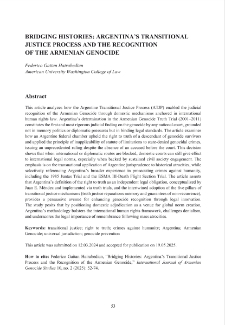
Title: Bridging Histories: Argentina’s Transitional Justice Process and the Recognition of the Armenian Genocide
Publication Details:
Journal or Publication Title:
Date of publication:
Volume:
Number:
ISSN:
Official URL:
Coverage:
Abstract:
This article analyzes how the Argentine Transitional Justice Process (ATJP) enabled the judicial recognition of the Armenian Genocide through domestic mechanisms anchored in international human rights law. Argentina’s determination in the Armenian Genocide Truth Trial (2001–2011) constitutes the first and most rigorous judicial finding on the genocide by any national court, grounded not in memory politics or diplomatic pressures but in binding legal standards. The article examines how an Argentine federal chamber upheld the right to truth of a descendant of genocide survivors and applied the principle of inapplicability of statute of limitations to state-denied genocidal crimes, issuing an unprecedented ruling despite the absence of an accused before the court. This decision shows that when international or diplomatic routes are blocked, domestic courts can still give effect to international legal norms, especially when backed by sustained civil society engagement. The emphasis is on the transnational application of Argentine jurisprudence to historical atrocities, while selectively referencing Argentina’s broader experience in prosecuting crimes against humanity, including the 1985 Juntas Trial and the ESMA III-Death Flight Section Trial. The article asserts that Argentina’s definition of the right to truth as an independent legal obligation, conceptualized by Juan E. Méndez and implemented via truth trials, and the intertwined adoption of the five pillars of transitional justice mechanisms (truth justice reparations memory and guarantees of non-recurrence), provides a persuasive avenue for enhancing genocide recognition through legal innovation. The study posits that by positioning domestic adjudication as a venue for global norm creation, Argentina’s methodology bolsters the international human rights framework, challenges denialism, and underscores the legal importance of remembrance following mass atrocities.
Place of publishing:
Երևան
Publisher:
ՀՀ ԳԱԱ Հայոց ցեղասպանության թանգարան-ինստիտուտ
Format:
Identifier:
oai:arar.sci.am:426073
Language:
Location of original object:
ՀՀ ԳԱԱ Հիմնարար գիտական գրադարան
Object collections:
Last modified:
Jan 21, 2026
In our library since:
Jan 16, 2026
Number of object content hits:
39
All available object's versions:
https://arar.sci.am/publication/458898
Show description in RDF format:
Show description in OAI-PMH format:
-
ՀՀ ԳԱԱ Շարունակական հրատարակություններ
-
Բնագիտության և տեխնիկայի պատմությունը Հայաստանում=История естествознания и техники в Армении
-
Գրական բանասիրական հետախուզումներ=Литературные разыскания
-
Գրականագիտական հանդես = Литературный журнал = Literary Journal
-
Լեզվի և ոճի հարցեր (Լրակազմեր) = Вопросы языка и стиля
-
Լեզվի և ոճի հարցեր = Вопросы языка и стиля
-
Լեզու և լեզվաբանություն= Язык и языкознание= Language and linguistics
-
ՀՍՍՌ ԳԱ Ն. Մառի անվան լեզվի ինստիտուտ. Աշխատությունների ժողովածու= Институт языка им. Н. Я. Марра АН АрмССР. Сборник трудов
-
Հայոց ցեղասպանության պատմության և պատմագրության հարցեր = Вопросы истории и историографии Геноцида армян=The issues of the history and historiography of the Armenian Genocide
-
ՀՀ ԳԱԱ Շիրակի հայագիտական հետազոտությունների կենտրոն. Գիտական աշխատություններ= Ширакский центр арменоведческих исследований НАН РА. Научные труды = Shirak Centre of Armenological Studies of NAS RA․ Scientific works
-
Շեքսպիրական. Հայկական շեքսպիրյան տարեգիրք (Լրակազմեր) = Шекспиракан. Армянский шекспировский ежегодник
-
Շեքսպիրական. Հայկական շեքսպիրյան տարեգիրք = Шекспиракан. Армянский шекспировский ежегодник
-
Հնագիտության և ազգագրության ինստիտուտի աշխատություններ = Proceedings of the Institute of Archaeology and Ethnography = Труды Института археологии и этнографии
-
Աշխատություններ փիլիսոփայության և իրավունքի ինստիտուտի
-
ԿԱՆԹԵՂ. Գիտական հոդվածների ժողովածու =КАНТЕХ. Научные труды =KANTEGH. Articles
-
«Կաճառ» Գիտական հոդվածների ժողովածու. ՀՀ ԳԱԱ Գիտակրթական միջազգային կենտրոն = ״Качар״ Сборник научных трудов. НАН РА Международный научно-образовательный центр =“Katchar” Collection of Scientific Articles. International Scientific-Educational Center NAS RA
-
ՀՀ ԳԱԱ երիտասարդ գիտաշխատողների հոդվածների ժողովածու= Сборник статей молодых научных сотрудников НАН РА= Collection օf Articles օf the Young Researchers օf NAS RA
-
Ժամանակակից Եվրասիա = Contemporary Eurasia
-
Սոցիալ-տնտեսական զարգացման արդի հիմնախնդիրները Հայաստանի Հանրապետությունում =Современные проблемы социaльно-экономического развития в Республике Армения =The contemporary issues of socioeconomic development in the Republic of Armenia
-
ՀՀ ԳԱԱ Գ. Ս. Դավթյանի անվան հիդրոպոնիկայի պրոբլեմների ինստիտուտ. Հաղորդումներ= Институт проблем гидропоники им. Г. С.Давтяна НАН РА. Сообщения= G. S. Davtyan Institute of Hydroponics Problems NAS RA. Communications
-
Խաղողագործության, գինեգործության և պտղաբուծության հայկական գիտահետազոտական ինստիտուտի աշխատություններ = Труды Армянского научно-исследовательского института виноградарства, виноделия и плодоводства
-
ՀՍՍՌ ԳԱ Հայ բժշկության և բիոլոգիայի պատմության սեկտոր. Աշխատություններ=Сектор истории армянской медицины и биологии АН Арм. ССР. Труды
-
АН СССР-Армянский филиал. Труды биологического института=Բիոլոգիայի ինստիտուտի աշխատություններ =Transactions of the Biological Institute
-
Лаборатория индуцированного мутагенеза растений․ АН Арм. ССР: Институт Экспериментальной биологии. АН Арм. ССР = Բույսերի ինդուկցված մուտագենեզի լաբորատորիա․ ՀՍՍՀ ԳԱ: Փորձարարական կենսաբանության ինստիտուտ․ ՀՍՍՀ ԳԱ
-
АН Армянской ССР. Ботанический сад. Бюллетень=Հայկական ՍՍՌ ԳԱ Բուսաբանական այգի. Բյուլետեն
-
АН Армянской ССР. Бюраканская оптико-механическая лаборатория= ՀՍՍՀ ԳԱ. Բյուրականի օպտիկա-մեխանիկական լաբորատորիա
-
Сборник научных трудов. Флора, растительность и растительные ресурсы.Тахтаджяния=Գիտական աշխատությունների ժողովածու: Հայաստանի ֆլորան, բուսականությունը և բուսական ռեսուրսները: Թախտաջանիա
-
Зоологический сборник = Կենդանաբանական ժողովածու = Zoological Papers
-
Միկրոբիոլոգիական ժողովածու: Գյուղատնտեսական և արդյունաբերական միկրոբիոլոգիայի հարցեր: Միկրոբիոլոգիայի հարցեր = Микробиологический сборник. Вопросы сельскохозяйственной и промышленной микробиологии. Вопросы микробиологии
-
Севанская озерная станция. Труды: Севанская гидробиологическая станция. Труды=Սևանի ջրակենսաբանական կայան. Աշխատություններ
-
Բյուրականի աստղադիտարանի հաղորդումներ: Երևանի աստղադիտարանի բյուլետեն (Լրակազմեր) = Сообщения Бюраканской обсерватории. Бюллетень ереванской Астрономической обсерватории = Contributions from the Burakan observatory. Bulletin of the Erevan astronomical observatory
-
Բյուրականի աստղադիտարանի հաղորդումներ: Երևանի աստղադիտարանի բյուլետեն = Сообщения Бюраканской обсерватории. Бюллетень ереванской Астрономической обсерватории = Contributions from the Burakan observatory. Bulletin of the Erevan astronomical observatory
-
Математические вопросы кибернетики и вычислительной техники=Կիբեռնետիկայի և հաշվողական տեխնիկայի մաթեմատիկական հարցեր=Mathematical problems of computer science
-
Сообщения института математики и механики= Մաթեմատիկայի և մեխանիկայի ինստիտուտի հաղորդումներ= Bulletin of the Institute of Mathematics and Mechanics
-
Գեոմեխանիկայի պրոբլեմներ =Проблемы геомеханики =Problems of geomechanics Գեոմեխանիկայի
-
Бюллетень по инженерной сейсмологии = Բյուլետեն ինժեներային սեյսմոլոգիայի
-
Труды ботанического института Академии наук Армянской ССР=Աշխատություններ Հայկական ՍՍՌ Գիտությունների ակադեմիայի բուսաբանական ինստիտուտի=Acta Instituti Botanici Academiae Scientiarum SSR Armeniae
-
Труды геологического института=Երկրաբանական ինստիտուտի աշխատություններ
-
Записки всесоюзного минералогического общества. Армянское отделение =Համամիութենական միներալոգիական ընկերության հայկական բաժանմունքի զեկուցագրեր
-
Ցեղասպանագիտական հանդես
-
Հասարակագիտական միտքը արդի ժամանակաշրջանում
-
Արեւելաասիական ուսումնասիրություններ=Eastern Asian Studies
-
ՀՀ ԳԱԱ Հ. Աճառյանի անվան լեզվի ինստիտուտի տեղեկագիրք=Directory of Institute of Language After H. Acharyan=Ведомости института языка имени Р. Ачаряна
-
Հայկական ՍՍՌ ԳԱ Ֆիզիոլոգիայի ինստիտուտ. Աշխատություններ: Բարձրագույն ներվային գործունեության հարցեր = Институт Физиологии АН Арм. ССР. Труды. Вопросы высшей нервной деятельности
-
International Journal of Armenian Genocide Studies=Հայոց ցեղասպանության ուսումնասիրության միջազգային հանդես
-
International Journal of Armenian Genocide Studies, 2014, vol. 1, # 1
-
International Journal of Armenian Genocide Studies, 2015, vol. 2, # 1
-
International Journal of Armenian Genocide Studies, 2016, vol. 3, # 1
-
International Journal of Armenian Genocide Studies, 2019, vol. 4, # 1
-
International Journal of Armenian Genocide Studies, 2020, vol. 5, # 1
-
International Journal of Armenian Genocide Studies, 2021, vol. 6, # 1
-
International Journal of Armenian Genocide Studies, 2022, vol. 7, # 1
-
International Journal of Armenian Genocide Studies, 2022, vol. 7, # 2
-
International Journal of Armenian Genocide Studies, 2023, vol. 8, # 1
-
International Journal of Armenian Genocide Studies, 2023, vol. 8, # 2
-
International Journal of Armenian Genocide Studies, 2024, vol. 9, # 1
-
International Journal of Armenian Genocide Studies, 2024, vol. 9, # 2
-
International Journal of Armenian Genocide Studies, 2025, vol. 10, # 1
-
International Journal of Armenian Genocide Studies, 2025, vol. 10, # 2
- Editorial board
- Content
- Law, Activism, and the International Recognitionof the Armenian Genocide
- Trapped in Legal Constraints or in States’ Own History? International Lawas an Explanation for the Reluctance to Recognize the Armenian Genocide
- In the Legal Limbo? Constitutional Debates on the Recognition of the Armenian Genocide in France
- Bridging Histories: Argentina’s Transitional Justice Process and the Recognition of the Armenian Genocide
- Academic Activism and Armenian Genocide Recognition in Australia
- The Armenian Model: The Recognition of Genocides in France
- When Armenians Take to the Streets: The 1979 March from Lyon and the Struggle for Genocide Recognition in France
-
International Journal of Armenian Genocide Studies, 2014, vol. 1, # 1
-
«Լոռե բերդից մինչև Ստեփանավան. պատմամշակութային ժառանգության հետքերով» և «ՀՀ ԳԱԱ պատմության ինստիտուտի երիտասարդ գիտաշխատողների խորհրդի XLIII գիտական նստաշրջան՝ նվիրված Սիմոն Կրկյաշարյանի ծննդյան 100-ամյակին»
-
Հայագիտական ընթերցումներ. Գիտական հոդվածների ժողովածու=Арменоведческие чтения. Сборник научных трудов=Armenological readings. Collection of scientific articles
-
Բնագիտության և տեխնիկայի պատմությունը Հայաստանում=История естествознания и техники в Армении


