
Object
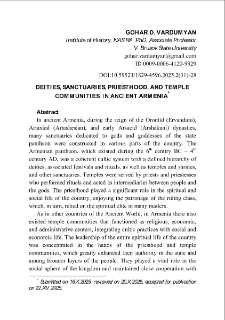
Title: Deities, Sanctuaries, Priesthood, and Temple Communities in Ancient Armenia
Journal or Publication Title:
Հայոց պատմության հարցեր = Вопросы истории Армении = The Problems of the History of Armenia
Date of publication:
Number:
ISSN:
Additional Information:
Вардумян Гоар Д., Վարդումյան Գոհար Դ․
Other title:
Боги, святилища, жречество и храмовые общины в Древней Армении ; Աստվածները, սրբավայրերը, քրմությունը և տաճարային համայնքները հին Հայաստանում
Corporate Creators:
Coverage:
Abstract:
In ancient Armenia, during the reign of the Orontid (Ervanduni), Artaxiad (Artashesian), and early Arsacid (Arshakuni) dynasties, many sanctuaries dedicated to gods and goddesses of the state pantheon were constructed in various parts of the country. The Armenian pantheon, which existed during the 6th centiry BC – 4th century AD, was a coherent cultic system with a defined hierarchy of deities, associated festivals and rituals, as well as temples and shrines, and other sanctuaries. Temples were served by priests and priestesses who performed rituals and acted as intermediaries between people and the gods. The priesthood played a significant role in the spiritual and social life of the country, enjoying the patronage of the ruling class, which, in turn, relied on the spiritual elite in many matters. As in other countries of the Ancient World, in Armenia there also existed temple communities that functioned as religious, economic, and administrative centers, integrating cultic practices with social and economic life. The leadership of the entire spiritual life of the country was concentrated in the hands of the priesthood and temple communities, which greatly enhanced their authority in the state and among broader layers of the people. They played a vital role in the social sphere of the kingdom and maintained close cooperation with the royal authority, sustaining both ideological and economic ties. The priesthood developed the tradition of deification of kings and the cult of royal ancestors, a striking manifestation of which was the dynastic pantheon of Antiochus I Orontid of Commagene on Mount Nemrut, featuring colossal sculptures of the gods and the king. The state pantheon, priesthood and temple communities continued to function until the adoption of Christianity in Armenia at the beginning of the 4th century AD, when the polytheistic religious system was supplanted by the new monotheistic faith. The ancient sanctuaries were converted into churches and monastic complexes, and the pagan priesthood was transformed into a Christian clerical hierarchy.
В Древней Армении, в период правления династий Ервандуни (Ервандидов), Арташесян (Арташесидов) и ранних Аршакуни (Аршакидов), в различных частях страны было построено множество святилищ, посвященных богам и богиням государственного пантеона. Армянский пантеон представлял собой целостную культовую систему с чёткой иерархией божеств, связанными с ними праздниками и ритуалами, храмами, капищами, алтарями и другими святилищами. Храмы обслуживались жрецами и жрицами, которые совершали обряды и выступали посредниками между людьми и богами. Жречество играло значительную роль в духовной и общественной жизни страны, пользуясь покровительством правящего класса, который, в свою очередь, во многих вопросах опирался на духовную элиту. Как и в странах древней Малой Азии, в Армении также существовали храмовые общины, выполнявшие функции религиозных, экономических и административных центров, интегрируя культовые практики с общественно-экономической жизнью. Сосредоточение главенства над всей духовной жизнью страны в руках жрецов и храмовых общин значительно укрепляло их авторитет в государстве и среди широких слоев населения. Они играли важную роль также в общественной жизни и тесно сотрудничали с царской властью, поддерживая как идеологические, так и экономические связи. Жрецы развивали традицию обожествления и культа царей и царских предков, ярким проявлением которой является династический пантеон Антиоха I Ервандуни в Коммагене, на горе Немрут, с огромными скульптурами богов и царя. Государственный пантеон, жречество и храмовые общины продолжали свое существование вплоть до принятия христианства в Армении в начале IV в., когда политеистическая религиозная система была вытеснена новой монотеистической верой. Многие древние святилища были преобразованы в церкви и монастырские комплексы, а языческое жречество трансформировалось в христианскую духовную иерархию.
Place of publishing:
Երևան
Publisher:
Format:
Identifier:
click here to follow the link ; oai:arar.sci.am:425748
Call number:
Series statement:
Location of original object:
ՀՀ ԳԱԱ Հիմնարար գիտական գրադարան
Object collections:
Last modified:
Feb 12, 2026
In our library since:
Dec 25, 2025
Number of object content hits:
627
All available object's versions:
https://arar.sci.am/publication/458544
Show description in RDF format:
Show description in OAI-PMH format:
-
Մատենաշարային և պարբերական հրատարակություններ
-
Օտար աղբյուրները Հայաստանի և հայերի մասին = Иноязычные источники об Армении и армянах
-
Հայ ազգագրություն և բանահյուսություն․ Նյութեր և ուսումնասիրություններ = Армянская этнография и фольклор. Материалы и исследования
-
Հնագիտական պեղումները Հայաստանում = Археологические раскопки в Армении
-
Հայաստանի հնագիտական հուշարձանները = Археологические памятники Армении
-
Դիվան հայ վիմագրության = Свод армянских надписей
-
Հայ ժողովրդական հեքիաթներ = Армянские народные сказки
-
Հայ ժողովրդի պատմություն, 8 h.= История армянского народа, 8 т.
-
Նյութեր հայ ժողովրդի պատմության = Материалы по истории армянского народа
-
Հայոց պատմության հարցեր = Вопросы истории Армении = The Problems of the History Of Armenia
-
Հայոց պատմության հարցեր. Երիտասարդ գիտաշխատողների հոդվածների ժողովածու, 1997, 1
-
Հայոց պատմության հարցեր. Գիտական հոդվածների ժողովածու, 2001, 2
-
Հայոց պատմության հարցեր. Գիտական հոդվածների ժողովածու, 2002, 3
-
Հայոց պատմության հարցեր. Գիտական հոդվածների ժողովածու, 2003, 4
-
Հայոց պատմության հարցեր. Գիտական հոդվածների ժողովածու, 2005, 5
-
Հայոց պատմության հարցեր. Գիտական հոդվածների ժողովածու, 2005, 6
-
Հայոց պատմության հարցեր. Գիտական հոդվածների ժողովածու, 2006, 7
-
Հայոց պատմության հարցեր. Գիտական հոդվածների ժողովածու, 2007, 8
-
Հայոց պատմության հարցեր. Գիտական հոդվածների ժողովածու, 2008, 9
-
Հայոց պատմության հարցեր. Գիտական հոդվածների ժողովածու, 2009, 10
-
Հայոց պատմության հարցեր. Գիտական հոդվածների ժողովածու, 2010, 11
-
Հայոց պատմության հարցեր. Գիտական հոդվածների ժողովածու, 2011, 12
-
Հայոց պատմության հարցեր. Գիտական հոդվածների ժողովածու, 2012, 13
-
Հայոց պատմության հարցեր. Գիտական հոդվածների ժողովածու, 2013, 14
-
Հայոց պատմության հարցեր. Գիտական հոդվածների ժողովածու, 2014, 15
-
Հայոց պատմության հարցեր. Գիտական հոդվածների ժողովածու, 2015, 16
-
Հայոց պատմության հարցեր. Գիտական հոդվածների ժողովածու, 2016, 17
-
Հայոց պատմության հարցեր. Գիտական հոդվածների ժողովածու, 2017, 18
-
Հայոց պատմության հարցեր. Գիտական հոդվածների ժողովածու, 2018, 19
-
Հայոց պատմության հարցեր. Գիտական հոդվածների ժողովածու, 2019, 20
-
Հայոց պատմության հարցեր. Գիտական հոդվածների ժողովածու, 2020, 21
-
Հայոց պատմության հարցեր. Գիտական հոդվածների ժողովածու, 2021, 1 (22)
-
Հայոց պատմության հարցեր. Գիտական հոդվածների ժողովածու, 2021, 2 (23)
-
Հայոց պատմության հարցեր. Գիտական հոդվածների ժողովածու, 2022, 1 (24)
-
Հայոց պատմության հարցեր. Գիտական հոդվածների ժողովածու, 2022, 2 (25)
-
Հայոց պատմության հարցեր. Գիտական հոդվածների ժողովածու, 2023, 1 (26)
-
Հայոց պատմության հարցեր. Գիտական հոդվածների ժողովածու, 2023, 2 (27)
-
Հայոց պատմության հարցեր. Գիտական հոդվածների ժողովածու, 2024, 1 (28)
-
Հայոց պատմության հարցեր. Գիտական հոդվածների ժողովածու, 2024, 2 (29)
-
Հայոց պատմության հարցեր. Գիտական հոդվածների ժողովածու, 2025, 1 (30)
-
Հայոց պատմության հարցեր. Գիտական հոդվածների ժողովածու, 2025, 2 (31)
- Կազմ; Խմբագրական խորհուրդ
- Ուրարտուի և Ասորեստանի պայքարը Սարդուրի II- ի գահակալության տարիներին ըստ Կ. Ֆ. Լեման- Հաուպտի հետազոտությունների
- Deities, Sanctuaries, Priesthood, and Temple Communities in Ancient Armenia
- Մի դրվագ Մոզդոկի հայության պատմությունից
- Тенденция изменений торонимики города Еревана в период Российской империи (1827-1918)
- Արևմտյան Հայաստանի հայ բնակչության ներքին տեղաշարժերին ու արտագաղթին նպաստող գործոնները (XIX դ. վերջ-XX դ. սկիզբ)
- Die Öffentlichkeit und die armenische Frage im deutschen Kaiserreich. Ein Überblick (1878-1918)
- Գևորգ Սուրենյանցի գրած կանոնները Հայ Առաքելական եկեղեցու Վրաստանի և Իմերեթի թեմի համար(1895 թ.)
- The Reflection of the Educational Life of Artsakh on the Pages of the Newspaper “Karabakh” (1911-1912)
- L’organisation de la vie Spirituelle, Educative et Culturelle de la Communaute Armenienne de Russie A L’epoque Post-Sovietique
- Current Educational Issues in the Armenian Community of Iran
- Նյութեր Դոնի Ռոստովի նարոդնիկական կազմակերպություններում հայերի մասնակցության մասին
- Անդրանիկ Եսայան, Տավուշ գավառը XVII դ․-XVIII դ․ առաջին քառորդին (պատմաժողովրդագրական ուսումնասիրություն), Երևան, 2024,196 էջ + քարտեզ
- Մարիամ Վ. Հովսեփյան, Հայաստանի Առաջին Հանրապետությունը Կ․ Պոլսի «ճակատամարտ» օրաթերթի էջերում (1918-1920 թթ․ինստիտուտ, Երևան, 2024, 246 էջ)
- Բովանդակություն; Содержание; Content
-
Հայոց պատմության հարցեր. Երիտասարդ գիտաշխատողների հոդվածների ժողովածու, 1997, 1
-
Արևելագիտական ժողովածու = Востоковедческий сборник
-
Արևելյան աղբյուրագիտություն = Восточное источниковедение = Studies in oriental sources
-
Արևելագիտությունը Հայաստանում = Востоковедение в Армении = Oriental Studies in Armenia
-
Մերձավոր Արևելք. Պատմություն, քաղաքականություն, մշակույթ = Middle East: History, politics, culture
-
Թուրքագիտական և օսմանագիտական հետազոտություններ = Туркологические и османистические исследования = Turkish and Ottoman studies
-
Էսթետիկայի հարցեր
-
Հայ էսթետիկական մտքի պատմությունից. Հետազոտությունների ժողովածու = Из истории эстетической мысли в Армении. Сборник исследований
-
The Caucasus On The Crossroads Of International Trade And Cultural Exchanges=Կովկասը միջազգային առևտրի և մշակութային փոխառնչությունների խաչմերուկներում
-
Հայաստան-Իրան. Պատմական անցյալը և ներկան=Armenia-Iran. Historical Past and the Present
-
Գիտական հոդվածների ժողովածու. Միջազգային գիտաժողովի նյութեր
-
Արևելյան աղբյուրագիտություն (Լրակազմեր) = Восточное источниковедение = Studies in oriental sources
-
Օտար աղբյուրները Հայաստանի և հայերի մասին = Иноязычные источники об Армении и армянах
| Edition name | Date |
|---|---|
| Vardumyan, Gohar D., Deities, Sanctuaries, Priesthood, and Temple Communities in Ancient Armenia | Feb 12, 2026 |


