
Object
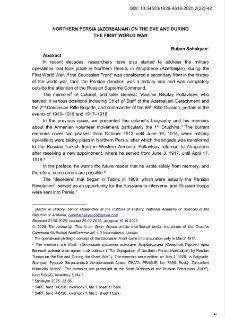
Title: Northern Persia (Azerbaijan) On The Eve And During The First World War
Publication Details:
Journal or Publication Title:
Հիմնարար հայագիտություն=Fundamental Armenology
Date of publication:
Volume:
ISSN:
Official URL:
Contributor(s):
Translated from Russian by Gevorg Harutyunyan
Coverage:
Abstract:
In recent decades, researchers have also started to address the military operations that took place in Northern Persia, in Atropatene (Azerbaijan), during the First World War. If the Caucasian Front1 was considered a secondary front in the history of the world war, then the Persian direction was a tertiary one and was completely outside the attention of the Russian Supreme Command. The memoirs2 of Colonel, and later General, Vladimir Nikolay Poltavtsev, who served in various positions including Chief of Staff of the Azerbaijani Detachment and the 2nd Caucasian Rifle Brigade, and commander of the 66th Rifle Division, pertain to the events of 1913–1915 and 1917–1918. In the previous issue, we presented the colonel’s biography and his memoirs about the Armenian volunteer movement, particularly the 1st Druzhina.3 The current memoirs cover two phases: from October 1913 until June 10, 1915, when military operations were taking place in Northern Persia, after which the brigade was transferred to the Russian-Turkish front in Western Armenia. Poltavtsev returned to Atropatene after receiving a new appointment, where he served from June 3, 1917, until April 17, 1918.4 In the preface, he warns the future reader that he wrote solely from memory, and therefore, some errors are possible.5 The “disorders” that began in Tabriz in 1909, which were actually the Persian Revolution6, served as an opportunity for the Russians to intervene, and Russian troops were sent into Persia. The Russians appointed their loyal officials to key positions, including the General- Governor of Azerbaijan, Shuja-ud-Daulah, whose residence was in Tabriz. He was accompanied by a representative of the Persian Ministry of Foreign Affairs, the karguzar, and the mayor.8 Shuja-ud-Daulah presented himself as a loyal friend of the Russian Empire and even at the end of 1914, he appealed to the commander of the Azerbaijani Detachment, asking him to intercede with the Tsar so that Northern Azerbaijan would accept Russian citizenship. The Russian side rejected the request, considering it untimely.9 Using Russian patronage, the General-Governor did not submit to the central authority and resorted to various machinations and embezzlements10. Poltavtsev admits that the General-Governor carried out the will and instructions of the Russians without any objection but did not believe in his loyalty to Russia.
Publisher:
Format:
Identifier:
oai:arar.sci.am:425728
Language:
Object collections:
Last modified:
Jan 9, 2026
In our library since:
Dec 24, 2025
Number of object content hits:
59
All available object's versions:
https://arar.sci.am/publication/458532
Show description in RDF format:
Show description in OAI-PMH format:
-
Հիմնարար հայագիտություն=Fundamental Armenology
-
Հիմնարար հայագիտություն, 2015, հատոր 1
-
Հիմնարար հայագիտություն, 2015, հատոր 2
-
Հիմնարար հայագիտություն, 2016, հատոր 1 (3)
-
Հիմնարար հայագիտություն, 2016, հատոր 2 (4)
-
Հիմնարար հայագիտություն, 2017, հատոր 1 (5)
-
Հիմնարար հայագիտություն, 2017, հատոր 2 (6)
-
Հիմնարար հայագիտություն, 2018, հատոր 1 (7)
-
Հիմնարար հայագիտություն, 2018, հատոր 2 (8)
-
Հիմնարար հայագիտություն, 2019, հատոր 1 (9)
-
Հիմնարար հայագիտություն, 2019, հատոր 2 (10)
-
Հիմնարար հայագիտություն, 2020, հատոր 1 (11)
-
Հիմնարար հայագիտություն, 2020, հատոր 2 (12)
-
Հիմնարար հայագիտություն, 2021, հատոր 1 (13)
-
Հիմնարար հայագիտություն, 2021, հատոր 2 (14)
-
Հիմնարար հայագիտություն, 2022, հատոր 1 (15)
-
Հիմնարար հայագիտություն, 2022, հատոր 2 (16)
-
Հիմնարար հայագիտություն, 2023, հատոր 1 (17)
-
Հիմնարար հայագիտություն, 2023, հատոր 2 (18)
-
Հիմնարար հայագիտություն, 2024, հատոր 1 (19)
-
Հիմնարար հայագիտություն, 2024, հատոր 2 (20)
-
Հիմնարար հայագիտություն, 2025, հատոր 1 (21)
-
Հիմնարար հայագիտություն, 2025, հատոր 2 (22)
- Editorial Board
- Contents
- The Preparatory Stage Of The Activity Of The Basel Missionaries In Shushi (1820-1824)
- Armen Garo's Undertaking Within The Framework Of The Civi lMission Of The RA To The USA At The End Of 1919
- Encyclicals, Circulars, And Appeals Of Patriarch Zaven Of Constantinople (1913-1922)
- Northern Persia (Azerbaijan) On The Eve And During The First World War
- The Socio-Economic Picture And Political Situation Of The EasternProvinces Of The Ottoman Empire In The 1830s And 1840s (According To The English Diplomat James Brant)
- Muslim Movements And Interethnic Processes In The Republic Of Armenia In 1918–1920
- The Outcomes Of U.S. Colonel W. Haskell’s Mandate In The Republic Of Armenia And Transcaucasia In The Context Of Ethno-Political And Interstate Conflicts And Territorial Delimitation In 1919–1920
- Consistent Manifestations Of Eloquent Cultural, Historical, And Psychological Ties Between Armenians And Russians
- Public Administration: Democratic Relationships And Leaders
- Komitas In The Life And Activities Of Thomas Hartmann
- Ashot Piliposyan, Hasmik Simonyan, Lianna Gevorgyan, Hayk Navasardyan, Metsamor: A Five-Thousand-Year-Old Settlement in Ancient Armenia, 2024, “Antares”
- New books
-
Հիմնարար հայագիտություն, 2015, հատոր 1
| Edition name | Date |
|---|---|
| Sahakyan, Ruben, Northern Persia (Azerbaijan) On The Eve And During The First World War | Jan 9, 2026 |


